Exceptional historic property – Grădina Icoanei / Ioanid Park area


Characteristics
Layout
Total usable area: 880 sqm
Built area: 1,454 sqm
Land area: 782 sqm
Layout by levels:
Basement: 254 sqm
Ground floor: 275 sqm
First floor: 282 sqm
Attic: 70 sqm
Loft: approx. 200 sqm
Description
Exceptional historic property – Grădina Icoanei / Ioanid Park area
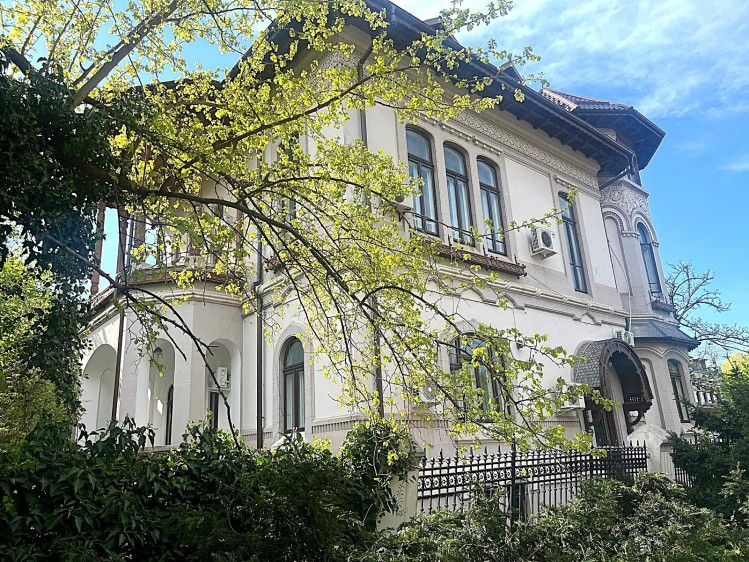
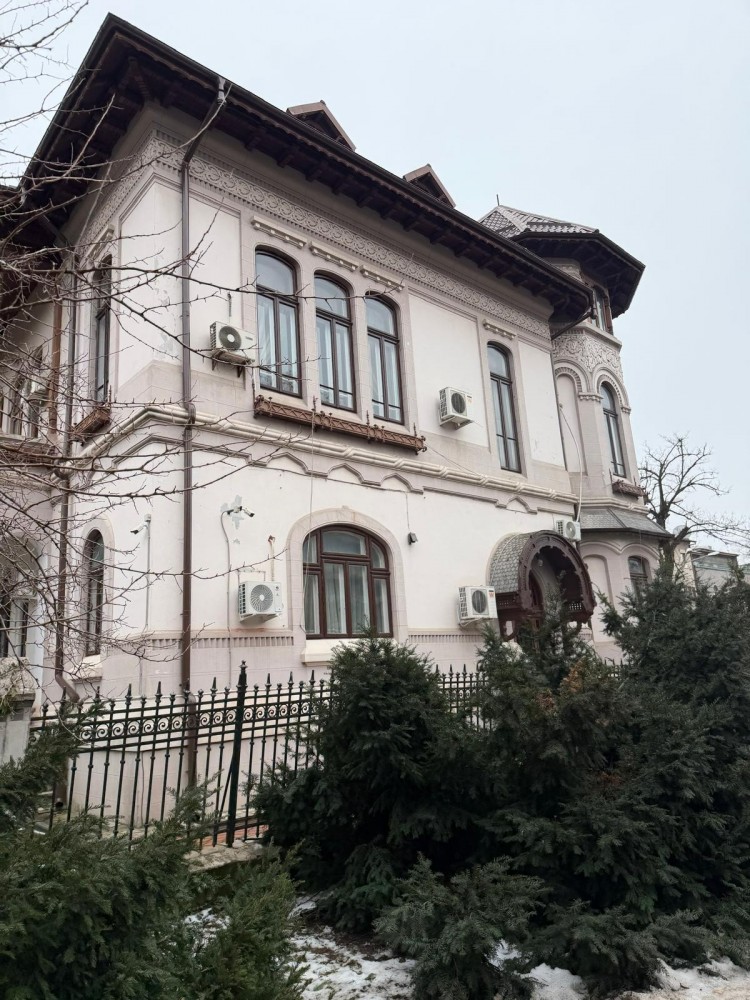
Located in one of the most exclusive and best-preserved historic areas of Bucharest, this remarkable villa is part of the prestigious Ioanid Parcelation, an early 20th-century urban ensemble designed as a neighborhood for the intellectual and military elite of the time.
Outstanding location
The property occupies a highly valuable corner position, benefiting from exposure and visibility towards Gheorghe Cantacuzino Square
This positioning allowed the architect to develop a complex volumetric composition, where each façade is treated distinctly yet perfectly harmonized with the geometry of the plot.
History and architecture
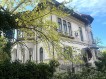
The year 1912 marks the moment when the renowned architect Paul Smărăndescu designed this emblematic building in the Neo-Romanian style. The construction was executed by the Italian engineer Emil Peternelli.
The villa was built simultaneously with another Bucharest masterpiece – the residence of Dr. Ciru Iliescu, designed by architect Petre Antonescu. Together, the two buildings flank the monumental main entrance to Ioanid Garden (today Ion Voicu Park). The Neo-Romanian style, encouraged by the authorities at the time for this development, gives the area a rare architectural coherence.
Faithful to his personal interpretation of the national style, Paul Smărăndescu created an elegant, sober villa perfectly integrated into its urban context—one of the most accomplished residences in the Ioanid Parcelation.
The Ioanid Parcelation and Ioanid Park form an elegant residential district in central Bucharest, developed based on an urban planning project drafted by the municipality in 1909.
The concept consists of a residential layout of 25 villas surrounding a public park.
Inspired by the great parks and squares of London, Berlin, and other major European cities, the elegance and prestige of the Ioanid – Grădina Icoanei neighborhood have been preserved to this day, making it one of the most sought-after and exclusive areas in Bucharest.
Defining architectural elements
The building’s volumetry is marked by three major vertical elements:
The corner gazebo, with a clear urban role, marking the entrance to the park—paired with the corresponding element of the villa designed by Petre Antonescu
The cantilevered loggia at the intersection of G. C. Cantacuzino Square and Dumbrava Roșie Street, supported by fluted columns and a full arch
A series of superimposed terraces facing the park, with masonry arcades on the ground floor and a wooden structure on the upper level, inspired by traditional Romanian verandas
The decoration is specific to the national style:
a band featuring the twisted rope motif
friezes with vegetal ornaments and palmettes
distinctive sculptural details at the gazebo level (pumpkin flower motif)
artificial stone frames for the main windows
Layout and functionality
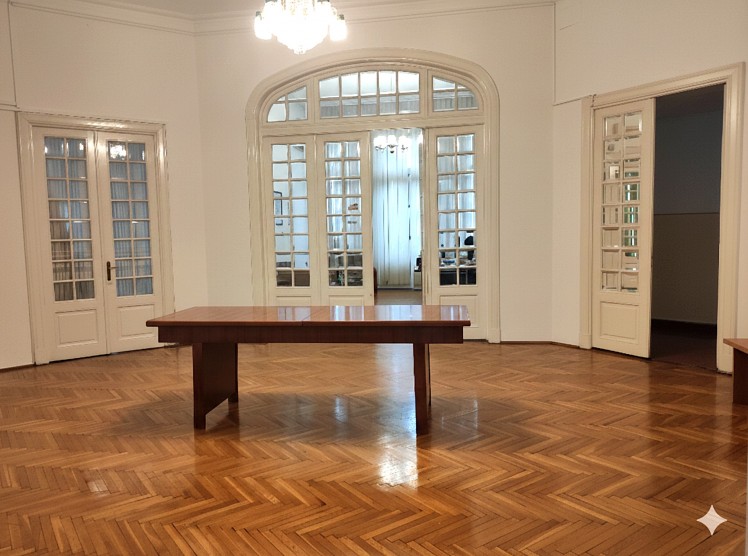
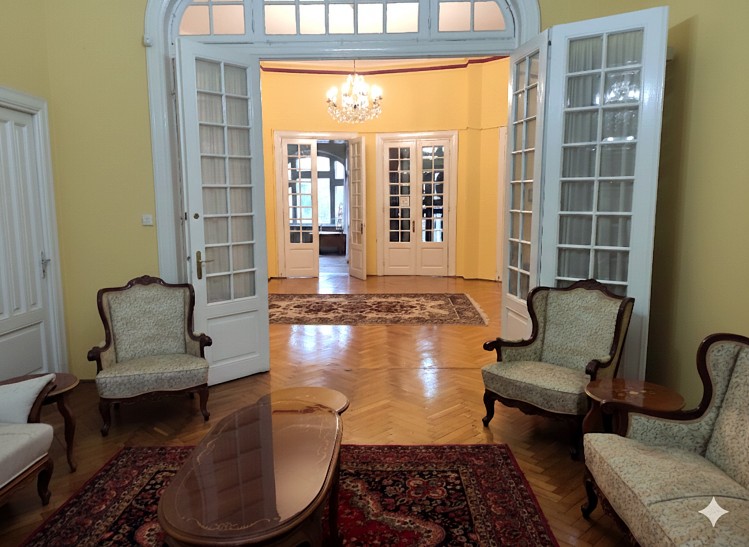
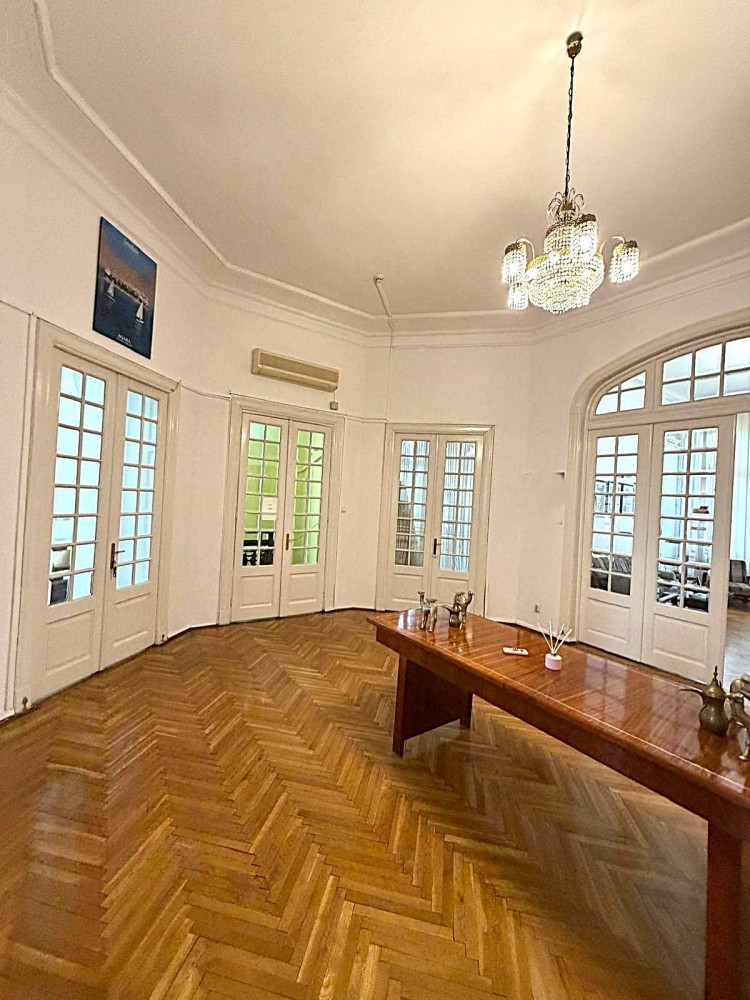
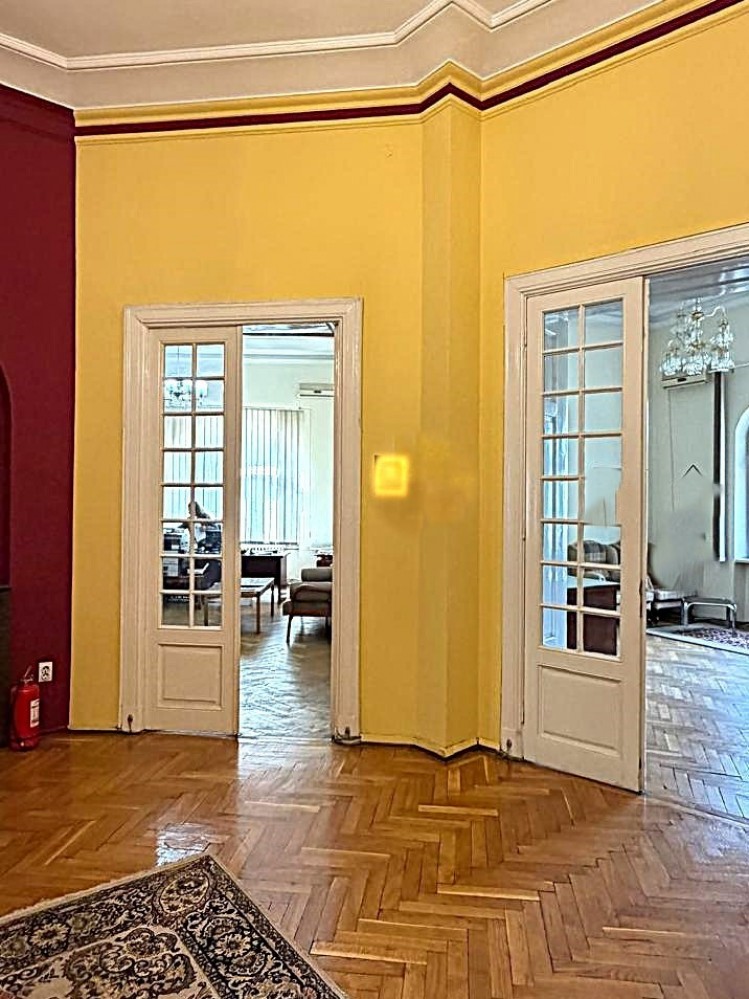
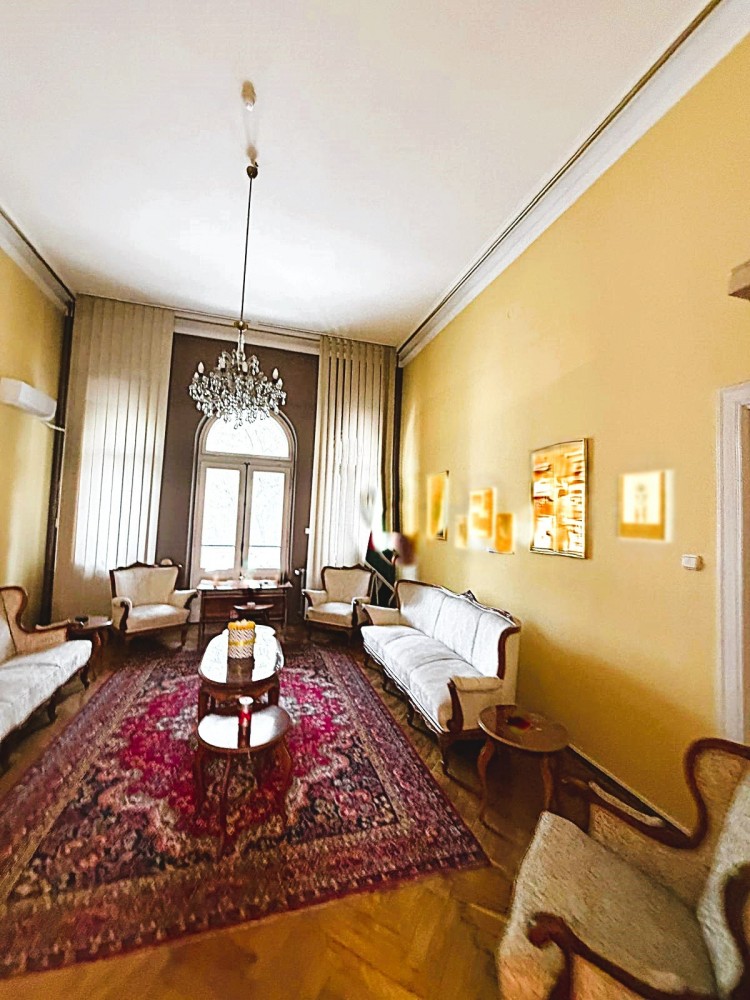
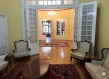
The corner positioning determined an interior layout organized around a central reception hall, providing access to all rooms.
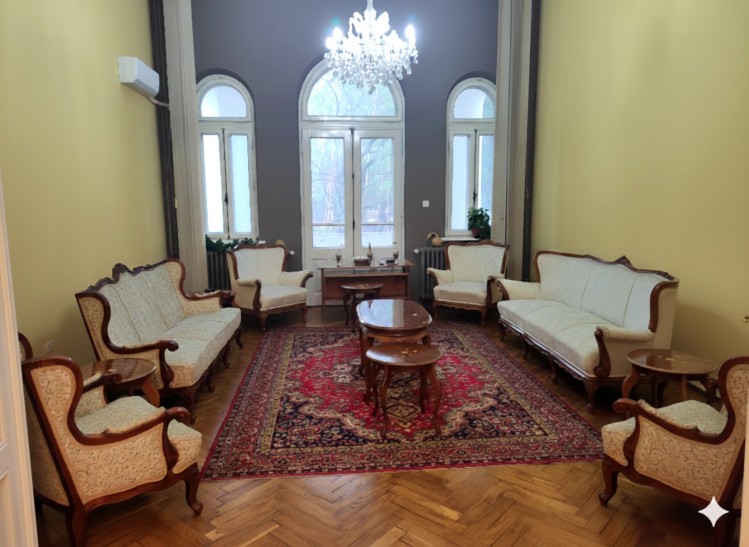
The layout is generous and flexible, suitable both for private residence and representative functions:
Living room
Spacious dining room with access to terraces overlooking the park
Office
Bedrooms oriented towards G. C. Cantacuzino Square and Dumbrava Roșie Street
Pantry, kitchen, and storage
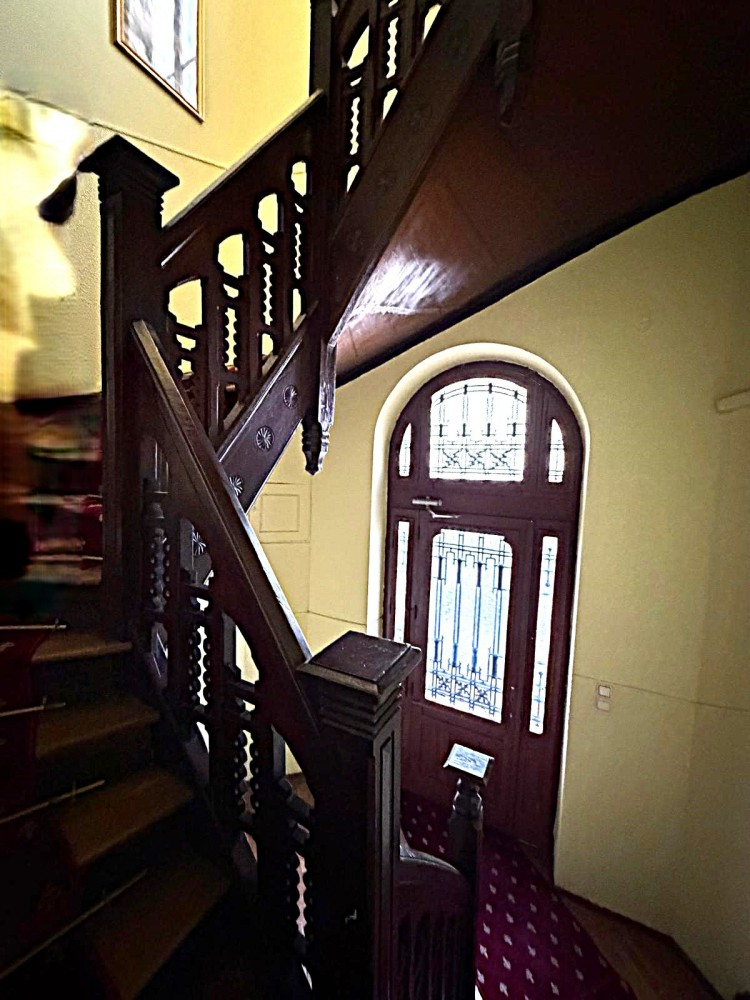
Secondary staircase connecting the basement, upper floor, and attic
The same functional structure is found on the upper floor, highlighted by a circular office and a terrace with planters facing the park.